

What’s Hot Right Now: Tradeshows are Where Operators’ Research Gets Validated and Trust is Earned
The National Restaurant Association Show is here again in May, kicking off the busiest season on the foodservice tradeshow calendar. For many foodservice brands, it’s one of the largest annual investments – and it can deliver significant returns, but only when you design the experience to build trust, not just generate traffic.
The operators on that show floor are not browsing. They arrive having already done their research: online, in trade media, through LLMs and chef networks. By the time they reach your booth, they have formed opinions. Your job is to confirm you are worth the investment and accelerate the path to a decision.
What stood out at NRA 2025
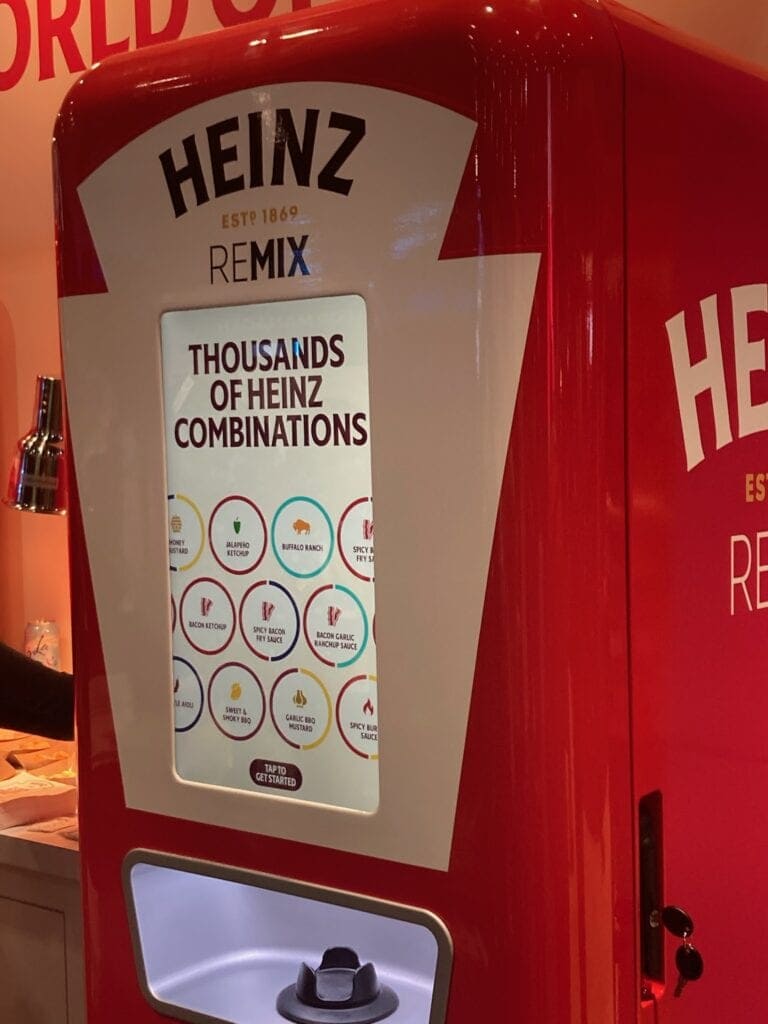
Last year’s show reminded us that the most memorable booths aren’t always the biggest, but the most experiential. Kraft Heinz created interactive sauce customization stations. Rana showcased ravioli as a QSR snack, turning heads with unexpected applications. Brands reserved second spaces for private sales meetings, signaling this was a deal-making environment.
These activations worked because they gave operators tangible proof. They could taste the innovation, visualize menu applications and experience the brand’s expertise firsthand. That’s what trust-building looks like at scale.
How to connect your booth strategy to sales outcomes
The best tradeshow strategies recognize the show is where trust gets confirmed and deals accelerate:
- Pre-show campaigns (emails, social posts, influencer partnerships, media placements) ensure operators arrive at your booth already aware of your credibility, not hearing about you for the first time.
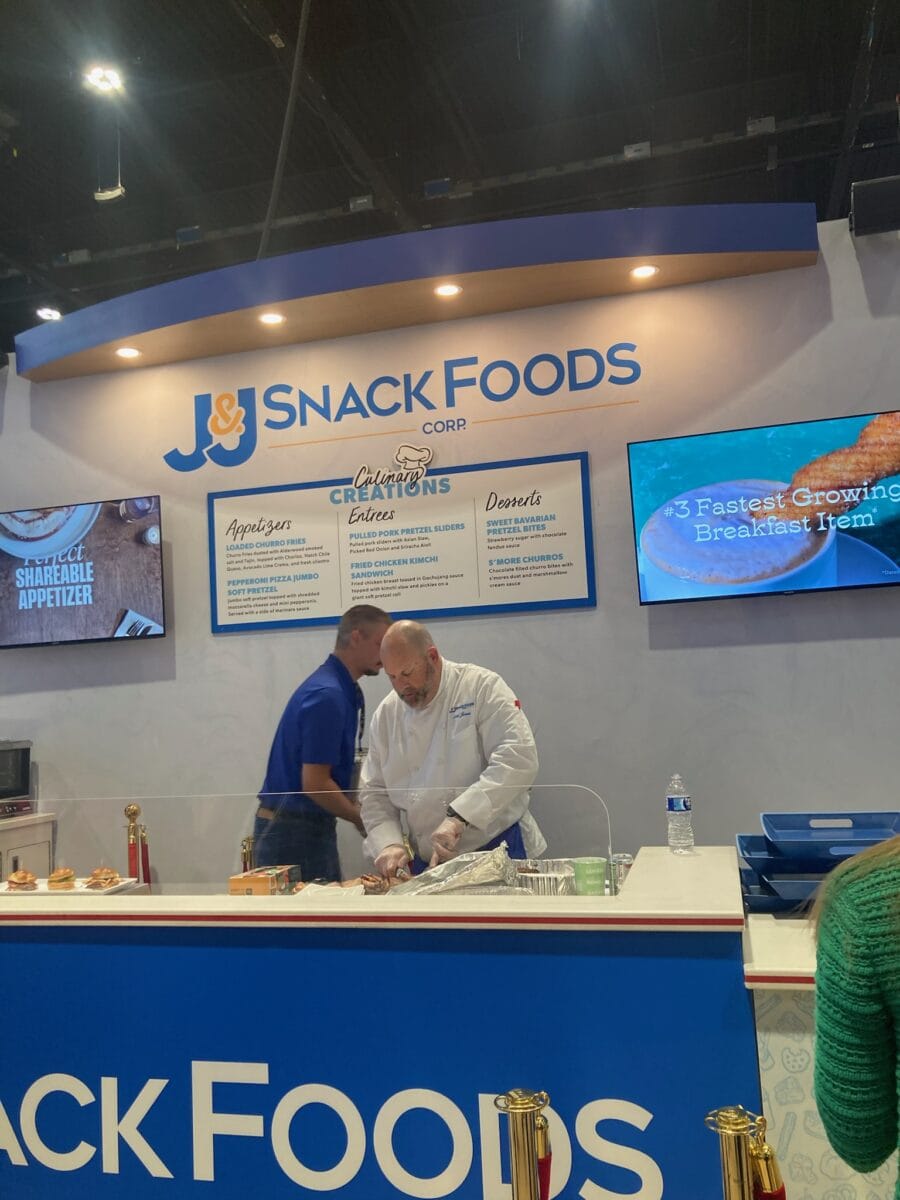
- Interactive booth elements (chef demos, live tastings, menu ideation workshops) validate what they’ve researched and give them confidence you can deliver.
- Post-show follow-up (recap content, sales assets, earned media coverage) reinforces that initial trust and keeps your brand top-of-mind as they make final decisions.
Your strategy should start with defining what success looks like beyond booth traffic. Are you introducing a new product line? Building relationships with independent operators? Breaking into new verticals? Each goal requires different booth experiences, pre-show credibility-building and follow-up plans that maintain momentum.
What to measure
Track metrics that show you’re building trust and moving buyers forward: pre-show meetings set, quality of booth conversations (not just quantity), post-show pipeline influenced, media coverage that validates your expertise and competitive win rates. Impressions are fine. Trust conversion is better.
Make operators arrive knowing your name and leave knowing you’re the right choice.
Planning to attend NRA in May? Reach out to megumi@bellecommunication.com so we can schedule time to connect!
Industry News: Chef Influencers Are Trust Accelerators Beyond the Booth
In a previous Influencer Insider column with Nation’s Restaurant News, we explored how B2B foodservice brands can leverage chef partners to boost social influence. Chef influencers extend your brand’s credibility into the channels where operators research year-round, not just when they’re walking a show floor.
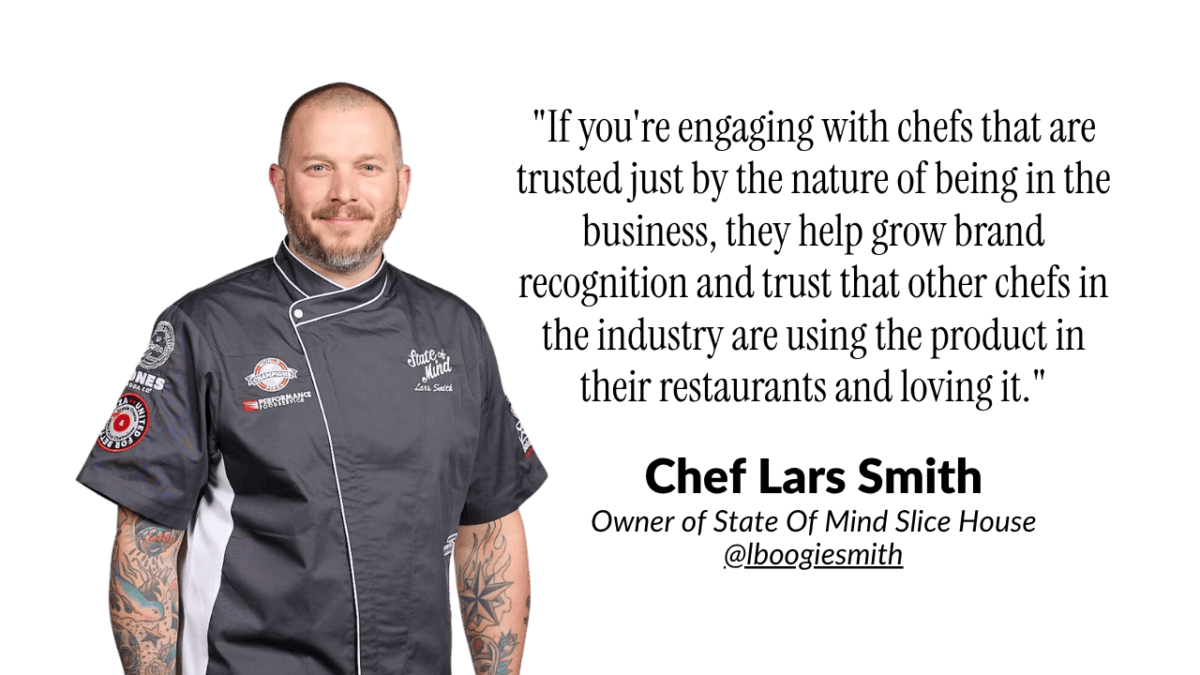
Chef influencers like Lars Smith (@lboogiesmith) and Michael Maccarrone (@Mikey.Marinara) are sharing content that addresses and solves problems for fellow operators. The products they use gain credibility and trust with their peers (aka, your sell-in target), accelerating the value of word-of-mouth recommendations.
Key takeaways around the value of chef partnerships worth revisiting:
- Chef audiences trust peer voices. When a chef with an established following showcases your product in their kitchen, other operators pay attention. Smith put it simply: “If you’re engaging with chefs that are trusted just by the nature of being in the business, they help grow brand recognition and trust that other chefs in the industry are using the product in their restaurants and loving it.”
- Authenticity can’t be scripted. The most effective partnerships aren’t overly produced. Smith noted that his content “in an apron that might be covered in flour, making a pizza, talking about something authentic” resonates far more than polished campaigns. Operators can tell when something is real.
- B2B content is solution-oriented. Maccarrone emphasized that operators “are looking for products that are sustainable, efficient and versatile. They want bold flavors and global inspiration to stand out.” Chef influencers who showcase how products solve real kitchen challenges create the kind of validation operators search for between buying decisions.
Check out the full story for more from our chef influencer partners.
News We’re Noting:
- Restaurants aren’t just competing with each other. The Food Institute reports that grocery and convenience are eating into foodservice traffic in ways that weren’t true a few years ago. Consumers are making the eat-in-or-eat-out decision situationally, based on price, convenience and what’s nearby. Couple that with food-away-from-home inflation outpacing food-at-home, and operators are facing margin pressure from both sides of the equation. Operators need menu solutions that justify the price point to a consumer who has more options than ever. As a supplier, if your product doesn’t help operators build that justification into the menu, it’s easy to cut.
- Welcome to the low-growth era. Now what? Restaurant Business Online put it plainly: the industry is settling into a sustained period of flat growth, and the brands that survive will be the ones that out-marketed their category. That means sharper positioning, smarter channel choices and tighter sales-marketing alignment. In a flat market, visibility and trust become the differentiator. The foodservice suppliers that have been building both will be ready. The ones that paused or eliminated their budgets will feel it.
- Digital orders through websites, mobile apps and kiosks now account for roughly three-fourths of all restaurant transactions, with QSR numbers still climbing. But according to Technomic, satisfaction scores for digital ordering trail in-person by four points, meaning the channel with the most volume is also the one with the most room to disappoint. For suppliers and ingredient brands, this gap matters: the product experience has to do more of the heavy lifting when the human interaction is gone. If your item doesn’t translate — visually, in description, as an upsell — it gets skipped.
Fresh Off The Press: Top Client Wins
- FSR | Powering Up For Breakfast
- Food Institute | Foodservice Battle: The Landscape
- Food Drink Life (picked up by Associated Press) | Chili Oil and Chili Crisp are Still Everywhere
- Food Institute | Breakfast for Champions? QSRs Invest in Morning Daypart
- Food Institute | Retail Therapy: ‘Feel Good’ Fuels Grocery Performance
- Perfumer & Flavorist | The Scoville Surge: Why ‘Swicy’ is Just the Start
- Connector Supplier | Q&A: Connectors and the Importance of DIN Standards
- Power Electronics News | What Rising Rack Densities Mean for Power Connectors
- Columbus Dispatch | Ohio shines in Midwest Living’s annual Best of the Midwest Awards
- Cincinnati Enquirer | What are the best brunch restaurants in the Midwest? 9 spots to try
Belle Headlines: Kate Finley named to the 2026 Inspiring Women class by Columbus CEO + Columbus Monthly
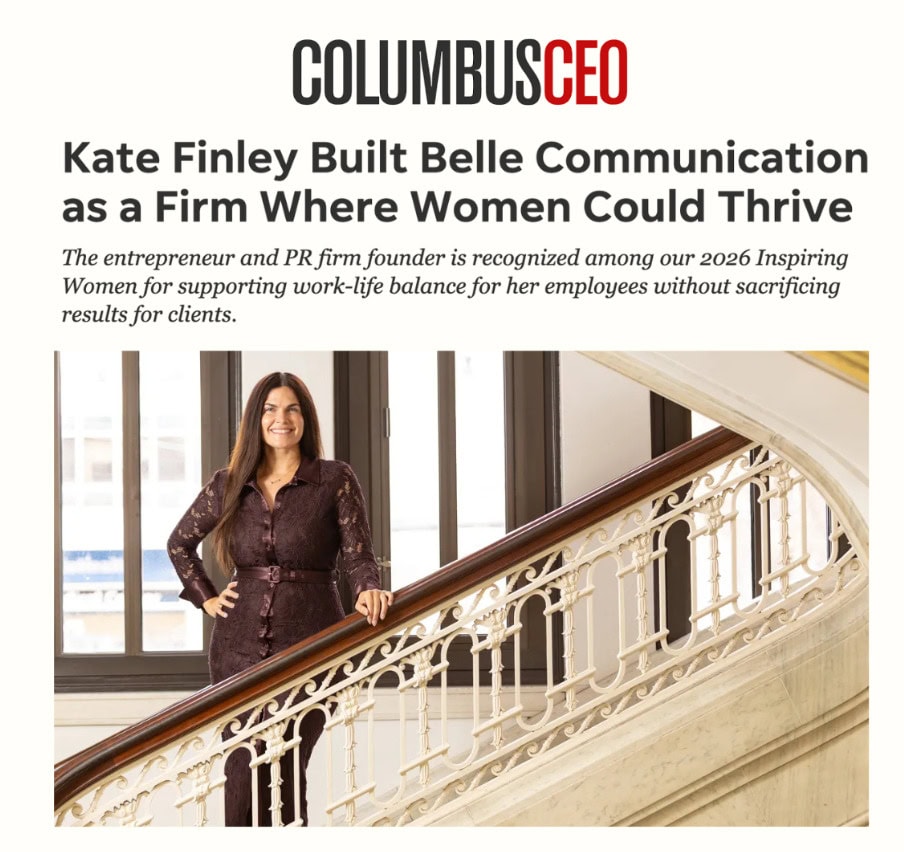
Each year, Columbus CEO and Columbus Monthly recognize women redefining their industries and leading with purpose — in science, education, politics, business and the arts. This year, our founder Kate Finley joined that class. It’s a reflection of what she’s built at Belle and the culture she’s fought to protect along the way, where ambitious work and a full life aren’t mutually exclusive.