
Belle’s founder Kate Finley was joined by Reed McCord, founder of First Bite and former leader at Impossible Foods, along with Mike Kostyo, VP at Menu Matters and longtime trends researcher at Datassential, to discuss how suppliers can win with operators in the year ahead.
Together, they dove into the 2026 Foodservice Marketing Report and examined shifts in operator behavior and the channels that truly influence purchasing decisions. If you missed the live session, you can watch the full recording or browse the recap below.
Contents:
- The Operator–Supplier Relationship Has Changed
- Distributors Are Not a Growth Engine
- What Many Foodservice Suppliers Still Get Wrong
- The New Foodservice Marketing Mix
- Email: Still a High ROI Channel
- Tradeshows: More Curated Experiences
- Chef Partnerships: Trust That Scales
- Social Media: Where Operators Source Answers
- Earned Media and AI Search: Hidden Growth Levers
- Where Foodservice Suppliers Should Go From Here
The Operator–Supplier Relationship Has Changed
Panelists started the conversation explaining how the foodservice industry is in flux. Discovery of new suppliers and back-of-house solutions is now more self-led and digital than ever.
Operators are doing their homework before they ever talk to a sales rep. And more of those first touches now occur online.
At the same time, information is coming at operators from every direction. Today’s foodservice buyer is swimming in information. There is no single gatekeeper or decision driver.
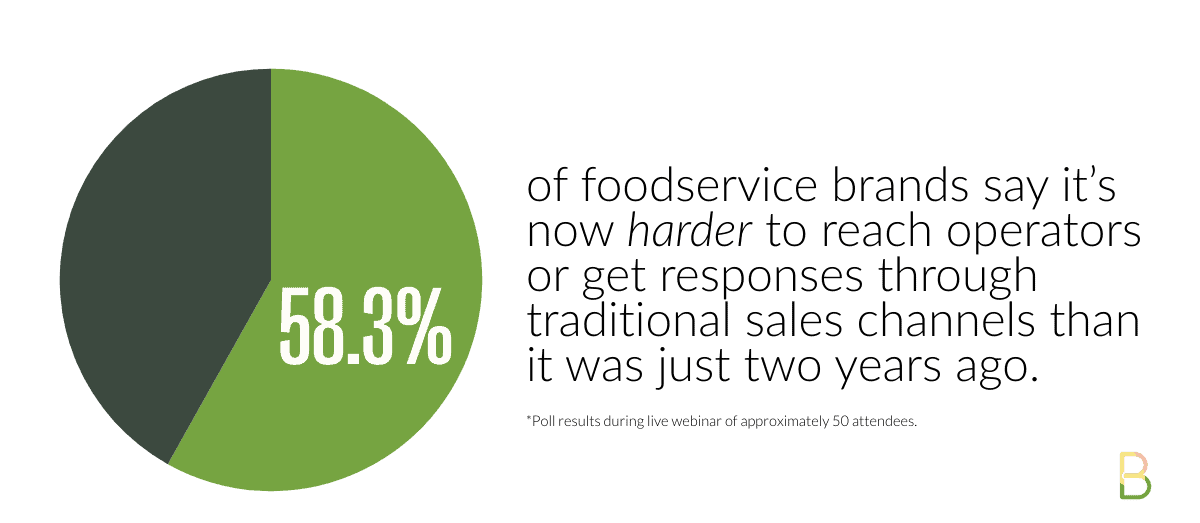
When asked how marketing and sales have evolved in the last two years, webinar attendees agreed:
- 58.3% said it’s now harder to reach operators or get responses through traditional sales channels
- 54.2% said decision-making now involves more people across marketing, culinary + procurement
- 33.3% said buying cycles are more complex — decisions take more touch points
Distributors Are Not a Growth Engine
Panlists discussed how relying solely on distributors is not the path to growth. Reed shared that, “When I think about the 400 or 500 manufacturers in the last few years I’ve connected with, I don’t think I’ve heard anyone say, you know, Sysco is the primary driver of my growth.”
Operators told us they now look to distributors for logistics and access, not for inspiration or new ideas. When they want information, advice and new products, they turn to trusted peers and do their own research.
For suppliers, that means growth depends on building operator intrigue and preference directly, then using that demand to unlock and accelerate distributor support.
What Many Foodservice Suppliers Still Get Wrong
Panelists shared their “hot take” on what most foodservice suppliers miss when trying to connect with operators. The common thread: suppliers need to talk about what operators care about and need, not just what they want to sell.
Don’t make marketing messages overly self-serving – When messaging is built around internal targets or inventory pressures rather than operator needs, it comes across as disingenuous.
Don’t forget about leading with operator empathy – Operators are running businesses on razor-thin margins. If you cannot credibly connect your product to outcomes they care about — higher traffic, higher check, labor savings, waste reduction or better guest experience — your message will not stick.
Don’t overcomplicate your message – Operator attention is limited. You get seconds. The suppliers that win make one or two sharp points that truly matter, not a laundry list of benefits.
The New Foodservice Marketing Mix
Panelists noted that there is no single silver bullet tactic for building operator demand. The foodservice suppliers who are growing are orchestrating a mix, firing on multiple cylinders.
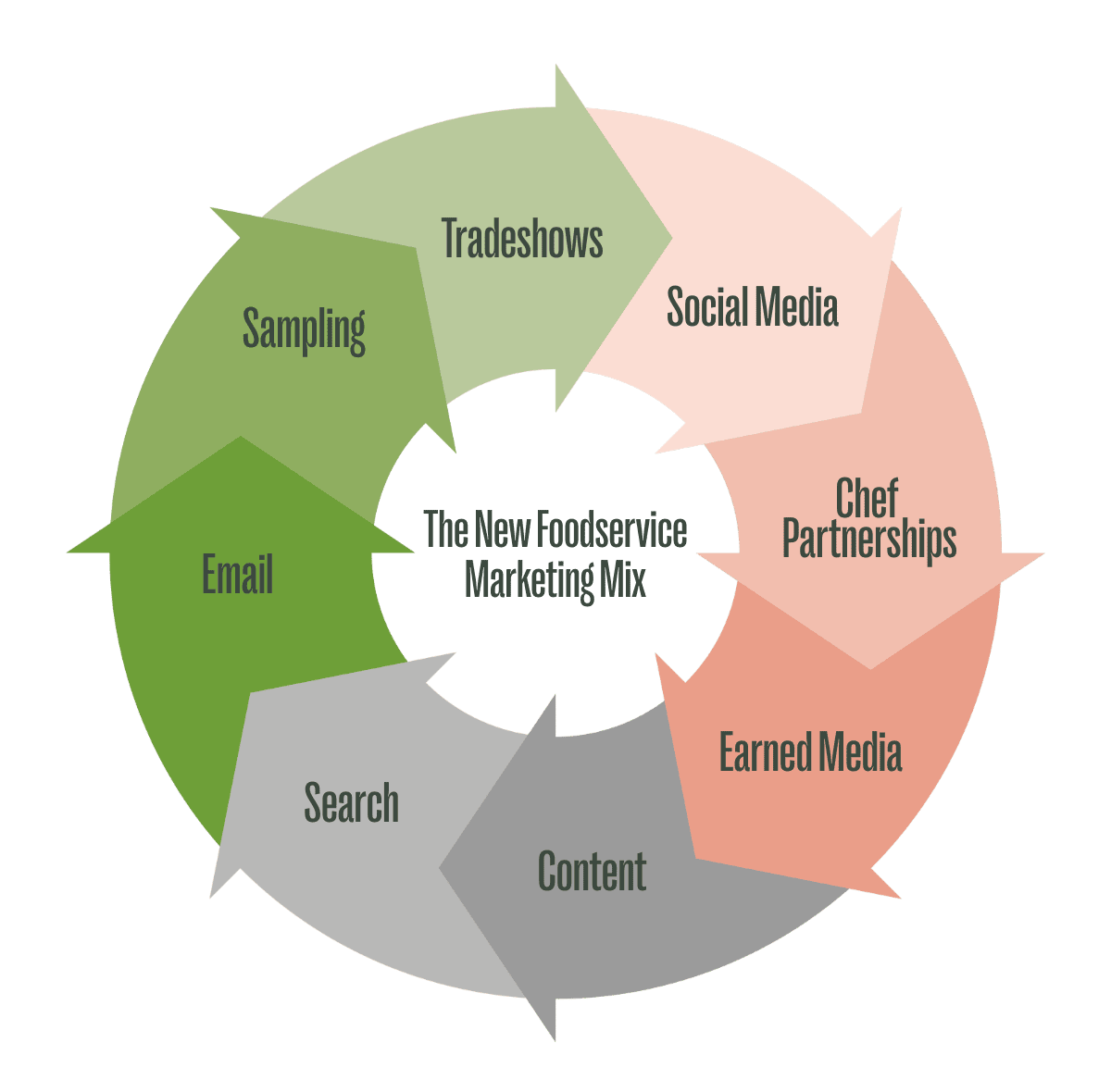
The discussed report uncovered eight key strategies that influence operator decision-making. However, when panelists asked the audience where they currently invest, clear gaps emerged, indicating where opportunities lie.
Which of these tactics are you currently using?
- Tradeshows → 87.5%
- Social media → 70.8%
- Email → 79.2%
- Sampling → 66.7%
- Content → 54.2%
- Chef partnerships → 29.2%
- Search → 37.5%
- Earned media → 20.8%
Email: Still a High ROI Channel
Email may not feel flashy, but when done right, it is one of the most powerful ways to build direct operator demand. Particularly with independent operators, who make up 75-80% of the market.
From First Bite’s data, they see 8–9 percent engagement when suppliers use the right email playbook.
Tradeshows: More Curated Experiences
The report data and live poll both confirmed that tradeshows are still central to how operators discover new products. But what those events look like is changing.
Shows are shifting from “walk the aisles and sample everything” to meet a growing demand for smaller, more intimate events where operators can talk through nuanced needs and collaborate with suppliers instead of just being pitched.
And when the large tradeshow environment persists, making booths as intimate and hands-on as possible is key for suppliers to truly stand out.
Chef Partnerships: Trust That Scales
Google searches for chef partnerships have surged, with a 2,485% increase over the last year and 15K Google searches in November 2025 alone. Why is interest so high? Because chef advocacy shapes decisions.
Simply put, chefs trust chefs. Restaurant operators pay close attention when peers they respect endorse a product, especially when it comes with real menu applications.
Social Media: Where Operators Source Answers
Social media is no longer just a consumer marketing channel. It is a working tool for operators who are:
- Looking for menu inspiration
- Tracking flavor trends
- Solving specific operational problems
- Sourcing new products and suppliers
But the majority of supplier social media content is overly focused on product imagery and not enough on what buyers are actually looking for. Adjusting social media strategies will be key for ongoing success.
On top of that, social listening can surface real opportunities. Chefs are posting about very specific product needs and pain points on platforms like Reddit, LinkedIn and Instagram. The suppliers who are paying attention and who respond with genuinely relevant solutions can position themselves as top of mind.
Earned Media and AI Search: Hidden Growth Levers
Despite being underused by many suppliers (as indicated in webinar attendee polling) report data showed that trade news outlets are still near the top of the channels operators trust and turn to when sourcing information.
These two stats point to a major opportunity for suppliers to stand out.
Additionally, news coverage appears in 49% of AI citations for timely queries, such as “updating menus for Gen Z coffee trends.” Foodservice suppliers should adjust their strategies to be included. Yet, within attendee polling, only 25% said they currently monitor and optimize their AI presence.
Where Foodservice Suppliers Should Go From Here
The path forward in 2026 is about building direct demand with operators, then using that demand to make every other part of your go-to-market work harder.
- Audit your marketing mix – Where are you over-indexed, and where are you underinvested? Are you visible where operators are actively engaging with suppliers? You may need to expand strategies or test new tactics.
- Tighten up your messaging – Make it about their business, not yours. Choose one or two outcomes you can credibly impact and lead with those. And remember to keep it brief and human.
- Get closer to operator voices – Through intimate events, social listening or chef partnerships, make sure your marketing efforts are grounded in actual operator behavior and feedback.