

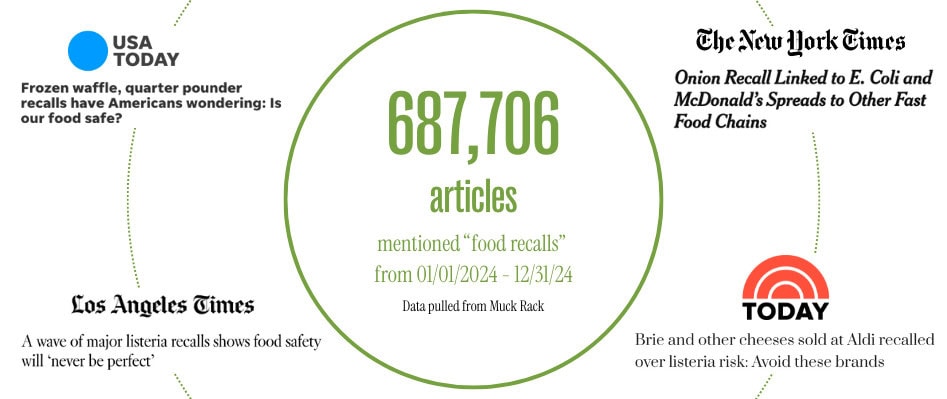
Each year, thousands of food safety issues capture the media’s—and consumers’—attention. In 2024 alone, Muck Rack shows 687,706 news articles mentioning “food recall” and 537,416 covering “food outbreak,” spotlighting everything from deli meats to frozen waffles and even pet food.
It’s not just the news outlets sounding the alarm; social media content creators are quick to jump in, bringing these issues straight to people’s feeds.
For food brands, that means handling a crisis is not enough—they need to have a plan that protects trust and reputation the second things start to heat up. Now more than ever, a smart, proactive crisis communication strategy isn’t just a good idea; it’s essential.
Here’s how food brands can stay one step ahead:
Are food outbreaks and recalls getting more common?
There hasn’t been a jump in outbreaks but recalls are trending higher. In 2023, the total number of food recalls and public health alerts by the USDA and FDA are the highest they’ve been since the pandemic, but are still lower than they were from 2018 to 2020. The number of food recalls in FY 2024 is consistent with years past, according to the FDA.
It might look like an increase in recalls, but it’s actually the system working as it should. Enhanced surveillance and digital tracking tools mean that small outbreaks that might have slipped through the cracks before are now getting the attention they deserve.
The most common reasons for food recalls and outbreaks include:
- Undeclared allergens
- Listeria contamination
- Salmonella contamination
- Un-inspected products
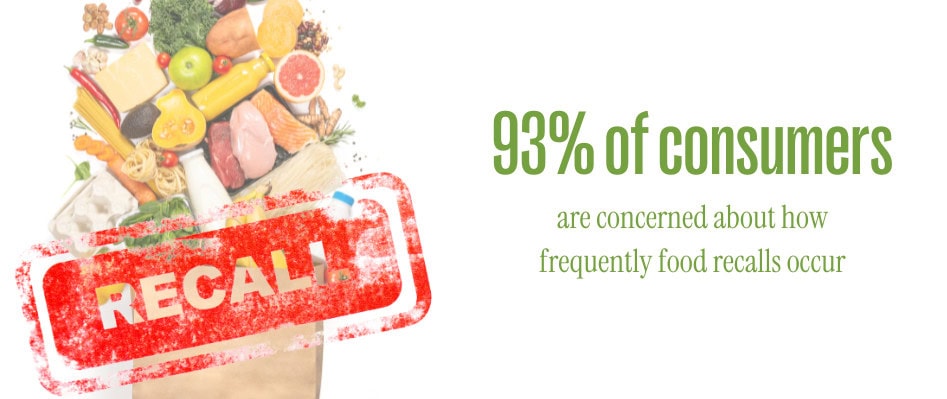
Consumers are noticing the rise in events. A 2025 survey commissioned by GS1 US revealed that while 85% of Americans believe food recalls are effective in protecting public health and safety, 93% are concerned about how frequently they occur.
This rise in food recalls is having a big impact on consumer behavior:
- 60% say that they have avoided an entire food category, such as lettuce, following a recall.
- 59% report hesitancy to purchase the same product or brand again after a food recall, especially Millennials (65%) and Gen Z (64%) compared with Baby Boomers (53%).
- 57% admit to discarding recalled food even if their state or region was not affected, with Millennials (70%) most likely to take this precaution.
A growing need for food safety crisis communication planning
Not only are more food safety issues being caught and reported, but social media reigns as an unfiltered and growing news source. Having a bulletproof plan for protecting your brand’s reputation and maintaining consumer trust is no longer a luxury—it’s a requirement.
In a food recall or outbreak, every second counts; the more time spent reacting, the more trust may be eroded. Forward-thinking brands invest in crisis mitigation—steps taken to prevent, minimize, or rapidly control damage before it escalates.
Crisis mitigation involves having pre-emptive measures in place, such as identifying potential vulnerabilities, training teams for swift action and planning clear lines of communication.
Crisis communication best practices
Each crisis comes with its own specific challenges, context, and nuances, yet the following should be applied in every situation.
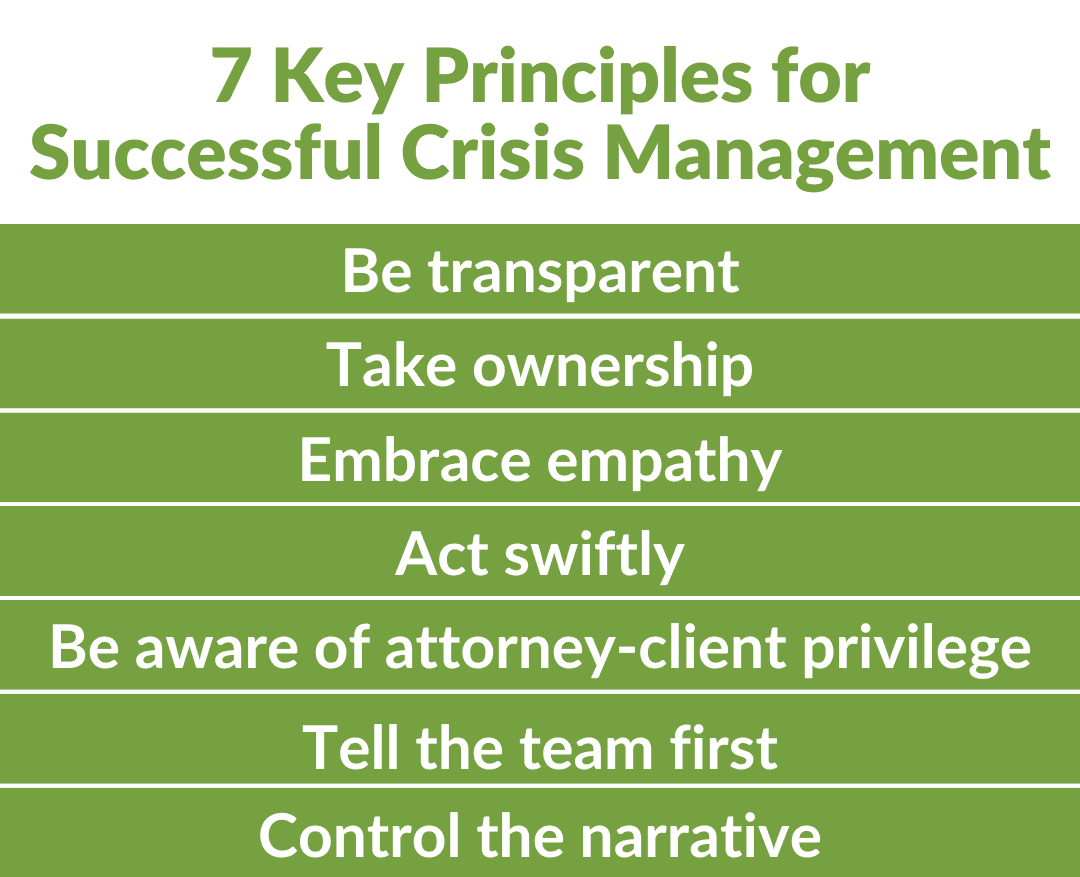
1) Be transparent
Share as much information as you reasonably and responsibly can while respecting confidentiality. If you’re still awaiting confirmation of information, share that.
2) Take ownership
State the facts; do not deny or place blame elsewhere, and keep messaging to the point.
3) Embrace empathy
Show authentic sincerity and concern for the situation.
4) Act swiftly
Move quickly – crisis timelines are measured in minutes and hours, not days.
5) Be aware of attorney-client privilege
Keep general counsel informed and involved from the beginning of the crisis.
6) Tell the team first
Communicate with relevant staff and members before any external statements to ensure all audiences are aware and prepared.
7) Control the narrative
Be proactive by sharing as much relevant detail as possible; the media and the public will fill any information gaps with speculation and assumptions.
Pro tip: A consistent cadence of positive media coverage prior to crisis situations can minimize the impact on your organization’s reputation. Google searches for your name will populate with more than just negative press. And when you have existing and positive relationships with journalists, they are more likely to come to you first during a crisis rather than make assumptions.
Food safety crisis communication plan template
Step 1: Assign a Crisis Task Force
- Define what parties/individuals will be responsible for overseeing and managing the crisis response process
- Establish roles, responsibilities and tasks each party/individual is responsible for
- Consider who will be assigned as backup for each task, in case of emergency
- Consider media training to prepare spokespeople on how to interact with reporters, prepare for interviews, field difficult questions and deliver key messages
Step 2: Define Audiences + Communication Channels + Timelines
- Detail who is included in external, internal and stakeholder or regulatory groups
- Define what is important to each of these audiences and what they will be looking for in updates
- Define primary and secondary communication channels (email, press release, social, phone, website, in-store signage, etc.) for each audience, focusing on what methods will reach them fastest and clearest
- To ensure consistent, proactive updates, set timelines (ex: within 1 hour, 3 hrs or 24 hrs) for responses based on crisis levels and define when action is required outside of normal business hours
Step 3: Create Message Templates and Pre-Approved Statements
- Prepare approved templates for various communication channels and audiences (press releases, social media posts, website notices, etc.) to speed up response times
- Ensure templates include placeholders for specific details (product name, batch numbers and recall reason) to quickly customize messaging
- Create FAQ templates for employees with standard responses so they can answer questions, reinforce brand messaging and direct inquiries appropriately
- To prepare spokespeople for potential media questions, have detailed answers ready for tough questions regarding safety protocols, cause of the issue and corrective actions
- Include core messages that emphasize commitment to safety, transparency and swift action, structured around:
- What: Specifics of the recall, including affected products and batch numbers
- Why: Reason for the recall and potential risks to consumers
- Action Steps: What consumers should do with affected products (e.g., how to return, dispose or seek refunds)
- Company Response: Assurance of corrective measures and steps to prevent recurrence
Step 4: Establish Crisis Review and Feedback Loop
- Set procedures for conducting a post-recall analysis, gathering feedback on communication effectiveness so adjustments can be made for future incidents
- Have a plan for collecting data on consumer response, media coverage and social media engagement to measure the plan’s impact
For information on building a comprehensive food recall plan, expanding beyond communication, check out this resource.
Preparing for a food safety crisis
Food recalls and outbreaks are a time to demonstrate a brand’s dedication to consumer safety with full transparency and genuine concern. While recalls and outbreaks are challenging and costly, they present an opportunity to reinforce trust by acting decisively and openly, showing that consumer well-being is a top priority.
Brands must be prepared to own the story before it owns them. When food companies are prepared to proactively handle a recall, crises can be mitigated and reputations maintained.