

Using AI search is now a normal step in both B2C and B2B buying. 86% of Gen Z professionals use AI daily and 58% of consumers have replaced traditional search engines with Gen AI tools for product/service recommendations.
This shift makes your brand’s presence inside AI systems integral to the buying journey.
While you can’t control exactly how you show up in AI search results, there is a lot you can do to manage it.
ChatGPT does not maintain a sentiment or reputation index for brands, nor does it store an evolving opinion of a brand. Instead, it pulls from its training knowledge and sources across the web, generalizing what it finds.
By strengthening the data that AI systems pull from, you influence what they surface about your brand and how reliably they present it.
Table of Contents:
- How to Control What Shows Up About Your Brand in AI
- Examples of Controlling Brand Narratives in AI Summaries
- Solving for Potential AI Visibility Pitfalls
How to Control What Shows Up About Your Brand in AI
- Get a Baseline – You cannot control what you do not measure. Use tools such as SEMrush or MuckRack, or run manual searches, looking at both branded and unbranded queries.
- Manage Message Consistency – Publish the same facts and brand language across company listings, press releases, web content and social media to reinforce a single narrative.
- Maintain a Steady News Presence – AI systems value recent and credible information, often pulling results from news outlets. Be present in those sources to be included.
- Populate Reviews, Awards and Listicles – AI highly values trusted sites that publish product reviews and rankings with testing data. Proactive PR outreach, pursuing awards and review campaigns can help secure inclusion.
- Structure Your Content – Ensure critical assets are crawlable and wrapped in proper schema.
Access more detailed advice here.
Examples of Controlling Brand Narratives in AI Summaries
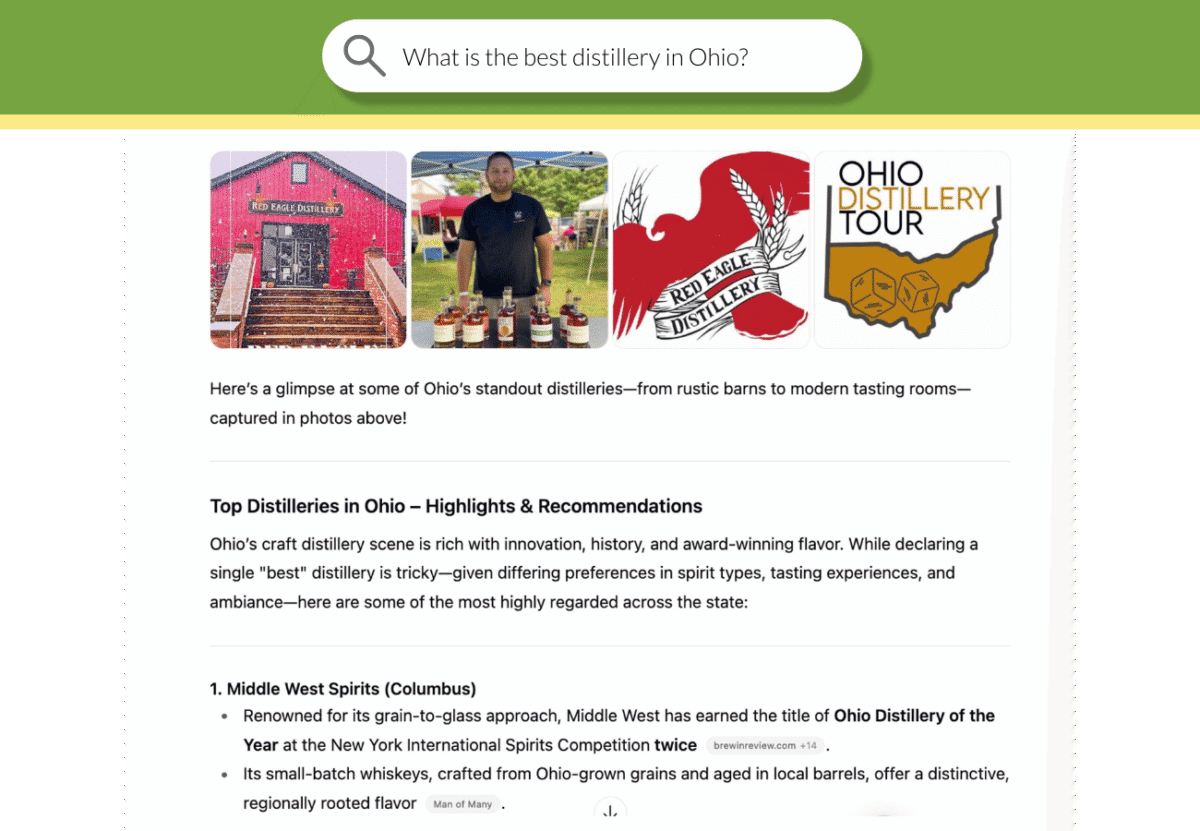
Middle West Spirits (Belle client) participated in industry competitions, pursued meaningful award opportunities, prioritized trade + local PR, and tapped trusted influencers to share honest reviews of its whiskeys. By earning numerous recognitions, Middle West Spirits now shows up in ChatGPT results as the best distillery in Ohio.
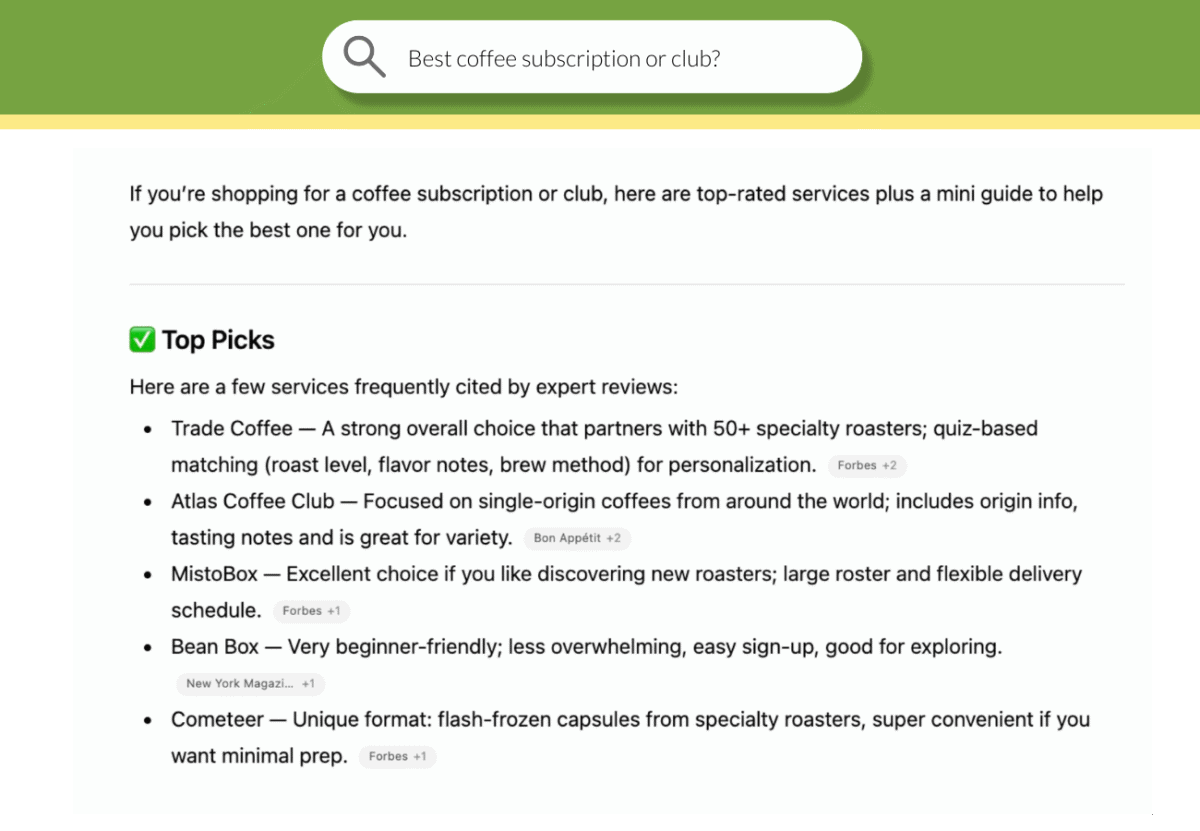
Trade Coffee is at the top of the list for “best coffee subscription or club” because of its inclusion in third-party lists, like Forbes, NY Magazine and Bon Appetit. Summary descriptions highlight its personalization options, as this message/differentiator is consistent across all its promotions and online brand mentions.
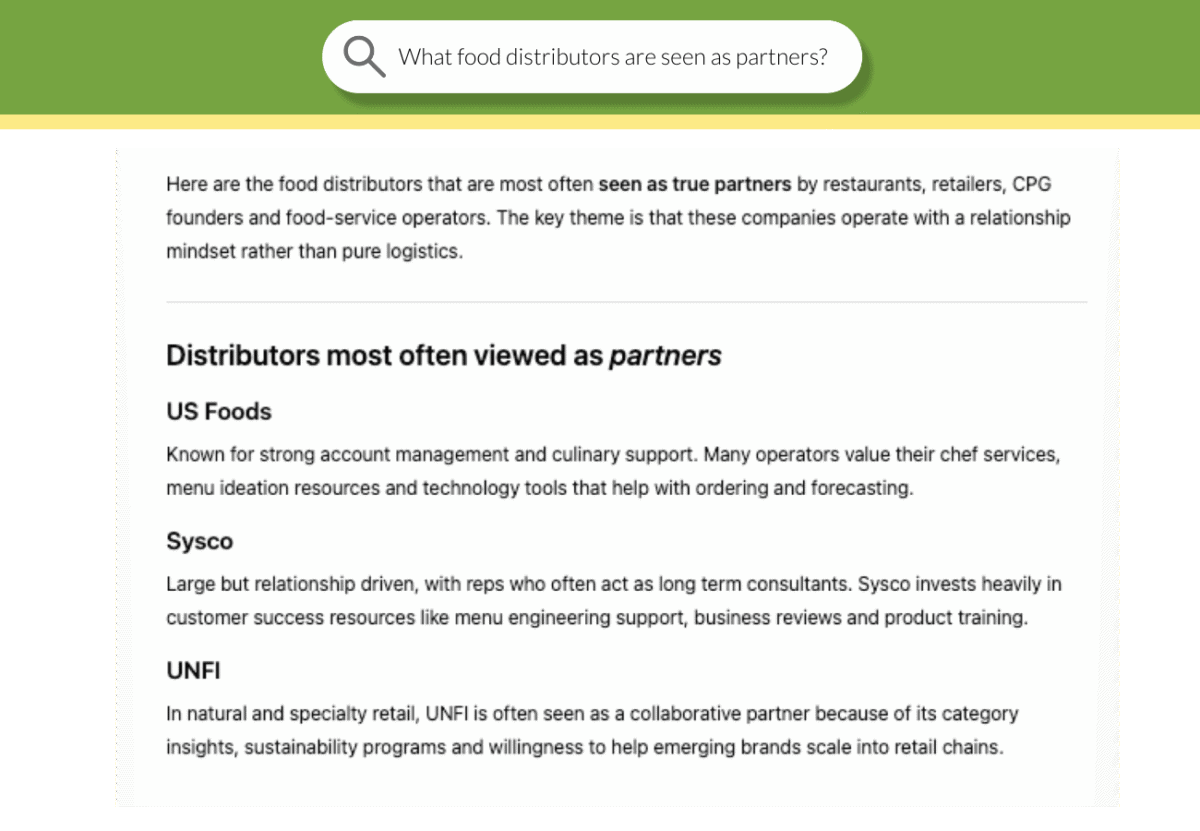
US Foods invests in structured digital content, like its Chef’s Store resources, culinary trend reports and operational guides. Because their content is rich with helpful facts and updated often, AI summarizes them as a partner rather than simply a distributor.
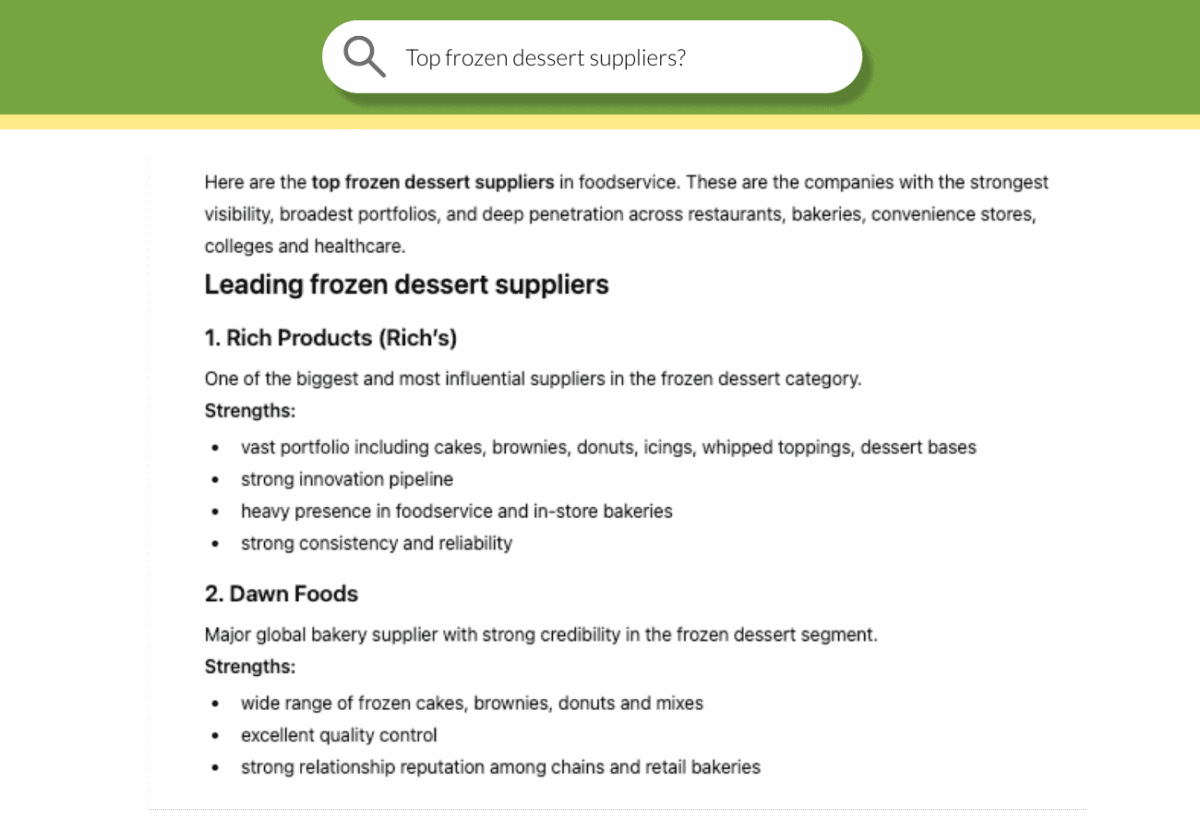
Rich Products is present in bakery and frozen dessert queries because it invests in operator support resources like training, culinary guidance, product education and menu development tools. These efforts increase how often the brand is referenced across digital content and industry conversations, impacting AI visibility.
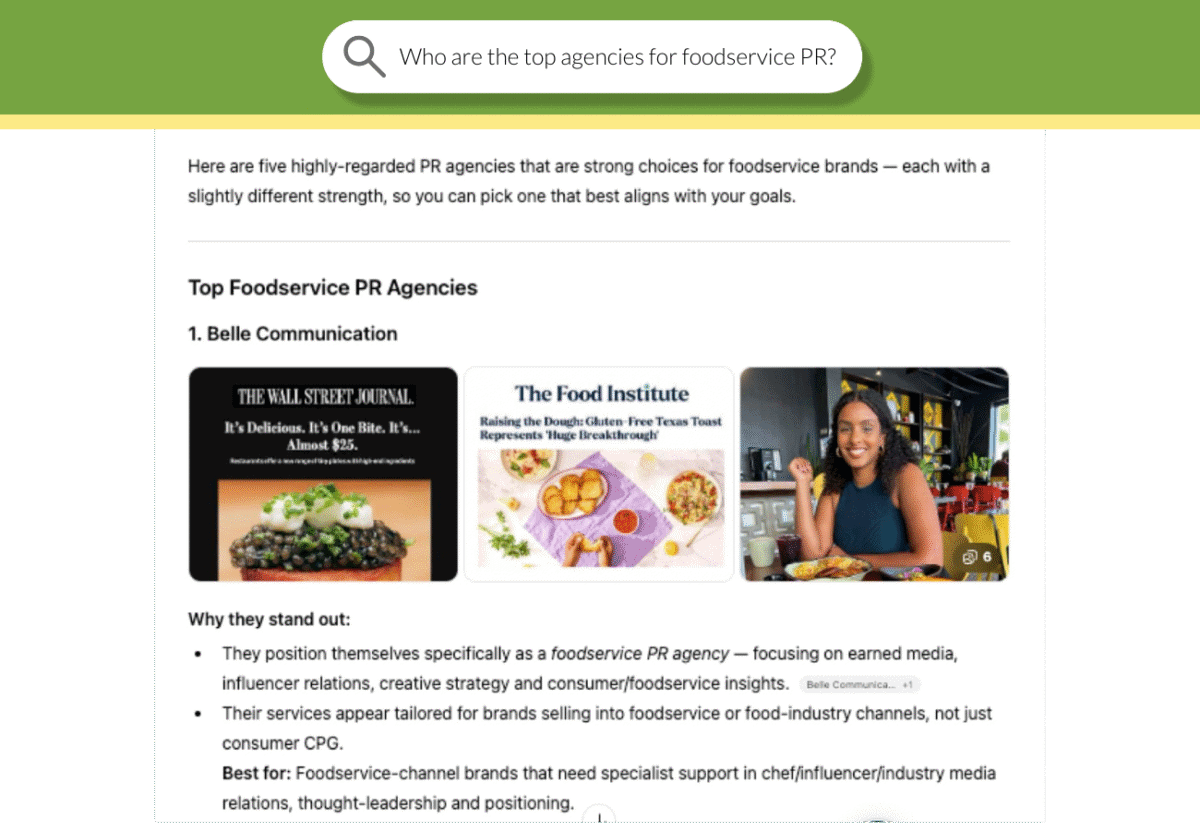
At Belle Communication, we follow our own advice. Through clear website messaging and thought leadership published on earned and owned channels about core subjects, we have established ourselves as the number one answer for queries like “top agencies for foodservice PR” and “top agencies for b2b chef partnerships.”
Solving for Potential AI Visibility Pitfalls
- Platform Bias – Different AI platforms weigh sources differently and may localize results based on user location or profile. Two users may see different outputs.
- Mitigation – Use temporary chat or history-off modes when testing. Publish consistent factual content across multiple high-authority domains to reduce variance.
- Mitigation – Use temporary chat or history-off modes when testing. Publish consistent factual content across multiple high-authority domains to reduce variance.
- Outdated or Hallucinated Facts – LLMs may cite old feature sets, specs or pricing when authoritative or recent data is sparse.
- Mitigation – Publish frequent, factual updates, news announcements or new product pages with proper schema and dates.
- Mitigation – Publish frequent, factual updates, news announcements or new product pages with proper schema and dates.
- Reddit and Other User Forums – Unverified anecdotes can skew sentiment.
- Mitigation – Monitor threads, address valid issues publicly and offer corrected context.
- Mitigation – Monitor threads, address valid issues publicly and offer corrected context.
- Paywalled Content – If key assets live behind forms, AI may rely on less accurate third‑party summaries or not include you.
- Mitigation – Provide ungated reports or robust executive summaries and landing pages with structured data.
- Mitigation – Provide ungated reports or robust executive summaries and landing pages with structured data.
- Times of Crisis – Results can skew to negative storylines when that is what dominates news media.
- Mitigation – Deploy a rapid-response approach: publish factual statements, FAQs and keep media in the loop on mitigation steps. More advice here.
- Mitigation – Deploy a rapid-response approach: publish factual statements, FAQs and keep media in the loop on mitigation steps. More advice here.
- Recency Bias – For certain queries, AI favors the newest content.
- Mitigation – publish often and schedule quarterly content refreshes so balanced, accurate coverage stays among the most recent sources AI pulls.
Manage How AI Sees Your Brand
Generative AI has disrupted brand visibility. Brands that audit their footprint, fortify trusted sources and publish proof points on a regular cadence give language models fewer gaps to fill with guesswork.
Treat AI as an always‑on channel, not a one‑off campaign, and you will own the narrative.